Why direct access matters
An assistant with its own credentials can retrieve information out of context or interpret the same metric in different ways
- Questions outside the expected scope
- Inconsistent definitions
- Difficulty reviewing what happened

Chat with business data
Rumbleo lets people ask, compare, and investigate without handing credentials or database control to the assistant. Each person can query only the data already authorized for them
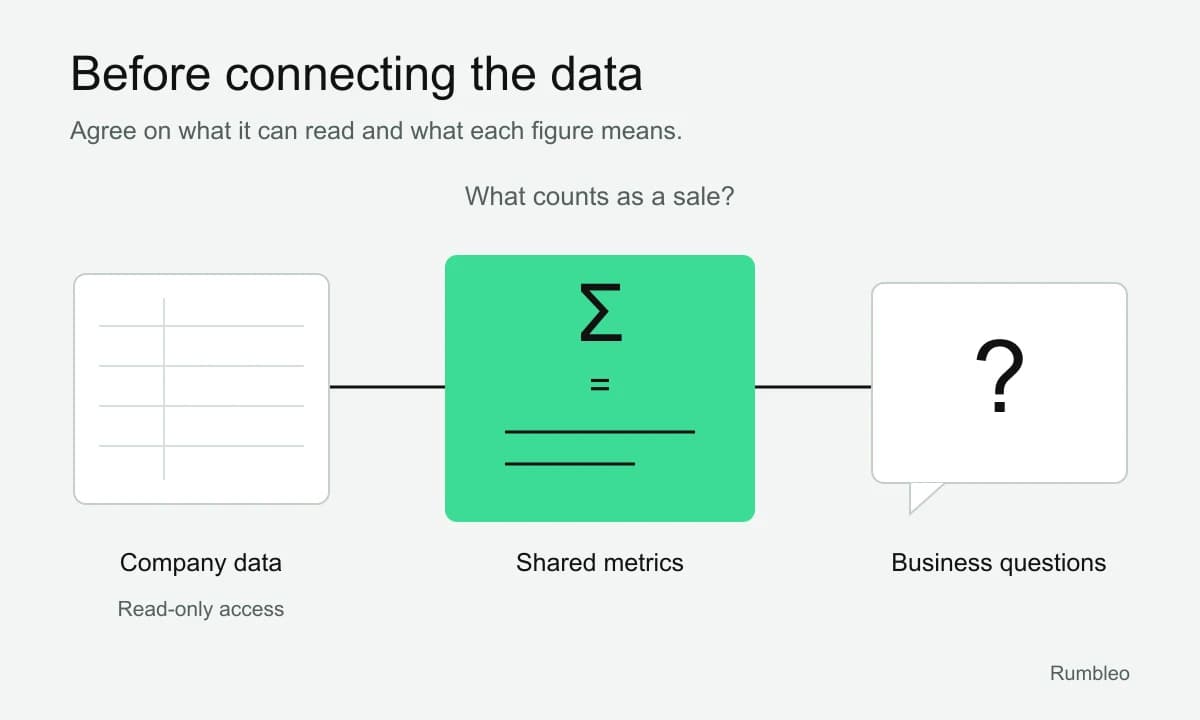
No credentials or direct connection from the assistant
The same definitions across the web and approved channels
Answers over internal data through read-only access
An assistant with its own credentials can retrieve information out of context or interpret the same metric in different ways
Rumbleo checks identity, permissions, and the request before accessing data
The same experience can run in Rumbleo or approved assistants without sharing the database connection
Follow-up questions reuse the period, segment, and criteria already agreed instead of starting from scratch
First question
Rumbleo identifies available metrics and dimensions and requests clarification when the scope is ambiguous
Follow-up
It keeps the period and investigates through the regional dimension defined in the model
Decision
It summarizes changes supported by the results and separates observed facts from possible hypotheses
No. Rumbleo keeps the connection, checks each request, and limits access to read operations
Yes, when the organization enables a compatible client and defines what each user may query
People may ask any question, but every answer respects the data and permissions attached to their account
A demo built around a decision
We will review the questions you need to answer, who needs the results, and which data they can access